Ready to build on land in Wilmer? The exciting part is picturing your future home. The hard part is making sure the acreage can actually support it. If you are buying raw land or planning your next step on a parcel you already own, knowing what to check first can save you time, money, and stress. Let’s dive in.
Why Wilmer acreage takes planning
A lot of buyers hear that unincorporated Mobile County has no zoning and assume building should be simple. In Wilmer, that is only part of the story. The bigger questions usually involve jurisdiction, subdivision rules, road access, flood conditions, utilities, and wastewater approval.
Mobile County states that there is no zoning in the unincorporated areas of the county. At the same time, county departments still handle land division, site development permitting, right-of-way permitting, and general land disturbance work. That means a parcel may still need several layers of review before it is truly ready for a homesite.
Confirm jurisdiction first
Before you make plans for a house pad, driveway, or utility connection, confirm which authority actually reviews the parcel. Mobile County notes that land outside municipal limits can still fall within a municipality’s planning jurisdiction. If it does, that municipality may handle parts of the development process instead of the county.
This step matters because approval paths change depending on where the parcel sits. A property could be outside city limits but still subject to municipal planning review. If it is outside both municipal limits and municipal planning jurisdiction, county administrative review applies and some situations may also require County Commission approval.
Mobile County also offers pre-development meetings and parcel-specific confirmation by request. For acreage buyers in Wilmer, that can be one of the most helpful first calls to make because the process is not one-size-fits-all.
No zoning does not mean no rules
Even in unincorporated Mobile County, permits and development standards still apply. County permit language also states that permits do not override existing subdivision covenants and restrictions. In plain terms, you still need to verify what can be done on the land before you move ahead.
If the parcel is part of an existing subdivision, private restrictions may affect your plans. If it is not, county permitting, access, drainage, and site review may still shape where and how you build.
Check whether the land can be divided
If you plan to split acreage before building, ask about subdivision rules early. Mobile County defines subdivision broadly, including lot layout, roads, drainage structures, buildings, and utilities. That means even a plan that feels simple can trigger a formal review process.
This is one area where timing can change quickly. A parcel that needs to be divided may take longer than one that is already configured the way you need it. Knowing that upfront helps you set realistic expectations and avoid expensive surprises later.
Make sure the homesite is buildable
A beautiful piece of land is not always a buildable homesite. Before you choose where the house will sit, you need to understand how the site handles wastewater, water supply, drainage, and flood exposure.
Septic approval can make or break the plan
If the property is not connected to public sanitary sewer, Alabama law requires a permit from the local health department before a new onsite sewage system can be installed or an existing one repaired. In Mobile County, the health department’s onsite services division handles septic permitting, installations, inspections, and related records.
This is why early site evaluation matters. Alabama public health guidance recommends evaluating the lot with a registered professional such as a land surveyor, soil classifier, or engineer because some lots are not suitable for onsite sewage disposal. If a parcel cannot support an approved septic system, your building plans may need to change, or the lot may not work for your intended use at all.
The health department may also have useful records, including septic locations and approved applications to install. For buyers comparing multiple acreage options in Wilmer, that information can be very valuable before you commit to a final homesite location.
Private well questions deserve attention
If the parcel may rely on a private well, testing should be part of your due diligence. Alabama public health guidance says the property owner is responsible for water safety and routine testing is strongly recommended.
For buyers, that means well planning is not just about drilling and placement. It is also about understanding long-term water quality and making sure you are comfortable with the ongoing responsibility that comes with a private water source.
Flood maps matter before site work starts
Flood exposure is another key factor in Wilmer-area land. Mobile County publishes flood-zone and storm-surge maps, and its site-plan requirements show that drainage, flood-zone mapping, and in some cases flood studies can become part of development review.
This is important because the best-looking build site is not always the most practical one. Checking flood conditions early can help you choose a better pad location and avoid redesigns later in the process.
Access and driveways often control the timeline
Many acreage buyers focus first on house plans. In reality, access can be the issue that drives the schedule. If the property does not have straightforward, approved access, everything else can slow down.
Any work in Mobile County rights-of-way, including driveways and utility crossings, requires a right-of-way encroachment permit. The county states that no construction may begin before the approved permit is issued, and drawings are required with the application.
If the parcel fronts a state road, the process can become more involved. Mobile County’s site-plan requirements say a copy of the Alabama Department of Transportation permit must be supplied to the county before approval.
Road maintenance is worth verifying
Not every acreage tract sits on a simple county-maintained road. Some are reached by a private road, a shared easement, or a route where maintenance responsibility is not obvious. Mobile County says staff can verify road maintenance responsibility upon request.
That makes this a smart question to ask early. It can affect your access planning, your budget, and how quickly the site can move toward a building permit.
Utility availability shapes your budget
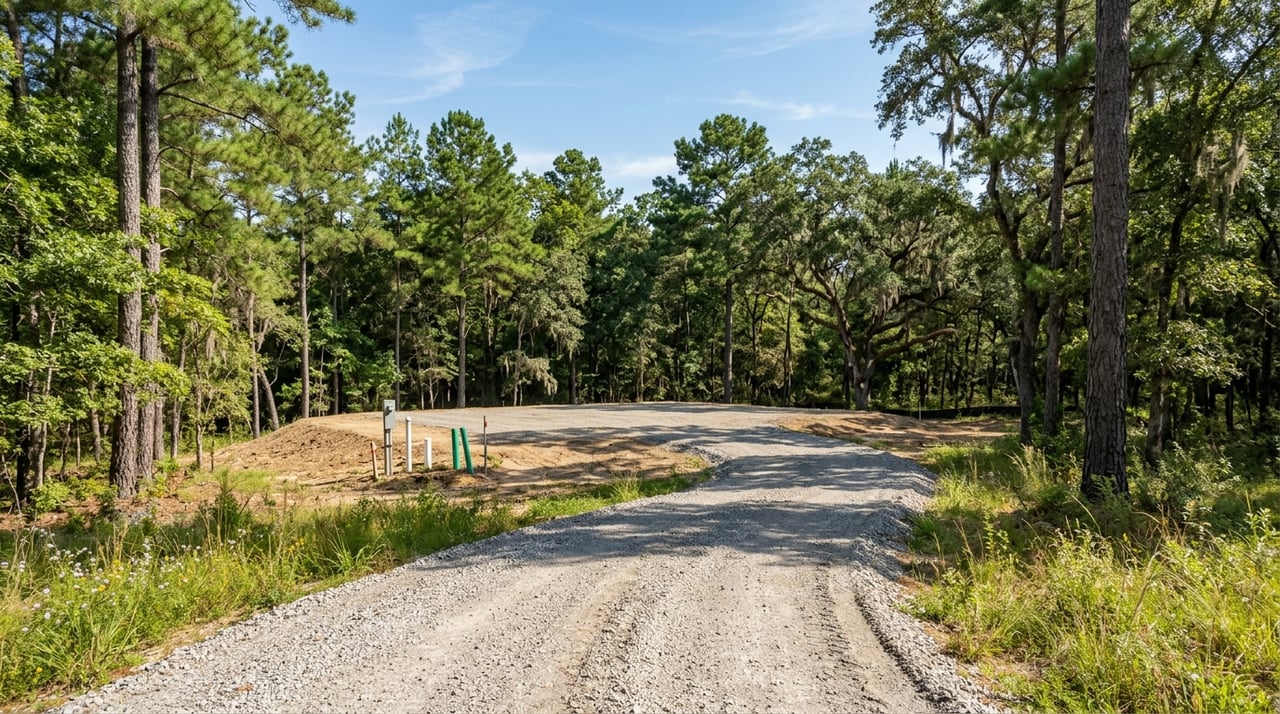
Utilities can be one of the biggest differences between a smooth homesite project and a costly one. Before you get too attached to a specific building location, confirm whether water, sewer, natural gas, and electric service are available at the parcel.
South Alabama Utilities states that Wilmer is within its service footprint and specifically lists Wilmer among its service areas. The utility says it provides water, natural gas, and sewer service in Mobile County, and new service requires a completed application plus required deposits and fees before service begins.
That does not mean every parcel has immediate access at the exact spot you want to build. Service area and service availability are not always the same thing, so it is wise to confirm the details for the specific tract.
A smart order of operations
When you are turning Wilmer acreage into a future homesite, the sequence matters. Taking steps in the right order can help you avoid duplicate work and unnecessary delays.
Here is the most practical path based on county, health department, and utility guidance:
- Confirm jurisdiction and any subdivision issues with Mobile County Planning and Development.
- Order a survey and, if needed, a soil or site evaluation for septic.
- Check flood maps and review road access.
- Confirm whether water, sewer, gas, and electric service are available.
- Obtain right-of-way or driveway permits before any work starts.
- Submit building permits only after the site is ready for review.
Mobile County also notes that pre-development meetings are available. For many buyers, that is the clearest sign that timelines are parcel-specific. A straightforward lot with solid access and available utilities will usually be simpler than acreage that needs subdivision approval, septic design, drainage review, or a state-road permit.
Know when building permits come later
In unincorporated Mobile County, Inspection Services handles building permits. County code also states that electrical and water service are not approved until the structure is code-compliant, flood-compliant, approved by the health department for intended use, and properly permitted and inspected.
That is why rushing to house plans too early can backfire. If the site is not ready, the building permit stage may still be further away than it seems. The county also states that permits generally expire after one year, though re-permitting may be approved for up to another year.
Why local guidance helps with acreage
Buying land is different from buying a move-in-ready home. With acreage in Wilmer, you are not just choosing a property. You are evaluating whether that property can support the future you have in mind.
That takes organized due diligence, clear communication, and local insight into how county review, access, utilities, and site conditions come together. When you walk through those steps early, you can move forward with more confidence and fewer surprises.
If you are considering Wilmer land and want a local team that understands acreage, homesites, and the practical side of getting from parcel to plan, reach out to Margo Ladner for thoughtful, hands-on guidance.
FAQs
Do I need zoning approval for acreage in Wilmer?
- Usually, unincorporated Mobile County does not have zoning, but you still need to confirm jurisdiction, subdivision status, access, flood conditions, and permit requirements for the specific parcel.
Can I build a home on Wilmer land without public sewer?
- Yes, if the site qualifies for an approved onsite sewage system through the local health department and the lot is suitable for septic use.
What should I check first before buying Wilmer acreage?
- Start by confirming jurisdiction, possible subdivision issues, road access, flood-zone conditions, and whether the property can support utilities and wastewater service.
What permits are commonly needed for a Wilmer homesite?
- Depending on the parcel, you may need subdivision review, septic approval, right-of-way or driveway permits, and building permits through Mobile County or another applicable jurisdiction.
What usually delays building on acreage in Wilmer?
- Common slowdowns include unclear road access, subdivision review, septic design, state-road frontage, floodplain or drainage issues, and utility availability.
Does utility service in the Wilmer area mean every parcel is ready to connect?
- No, a utility service area does not automatically mean service is immediately available at every parcel, so you should verify availability for the specific property.