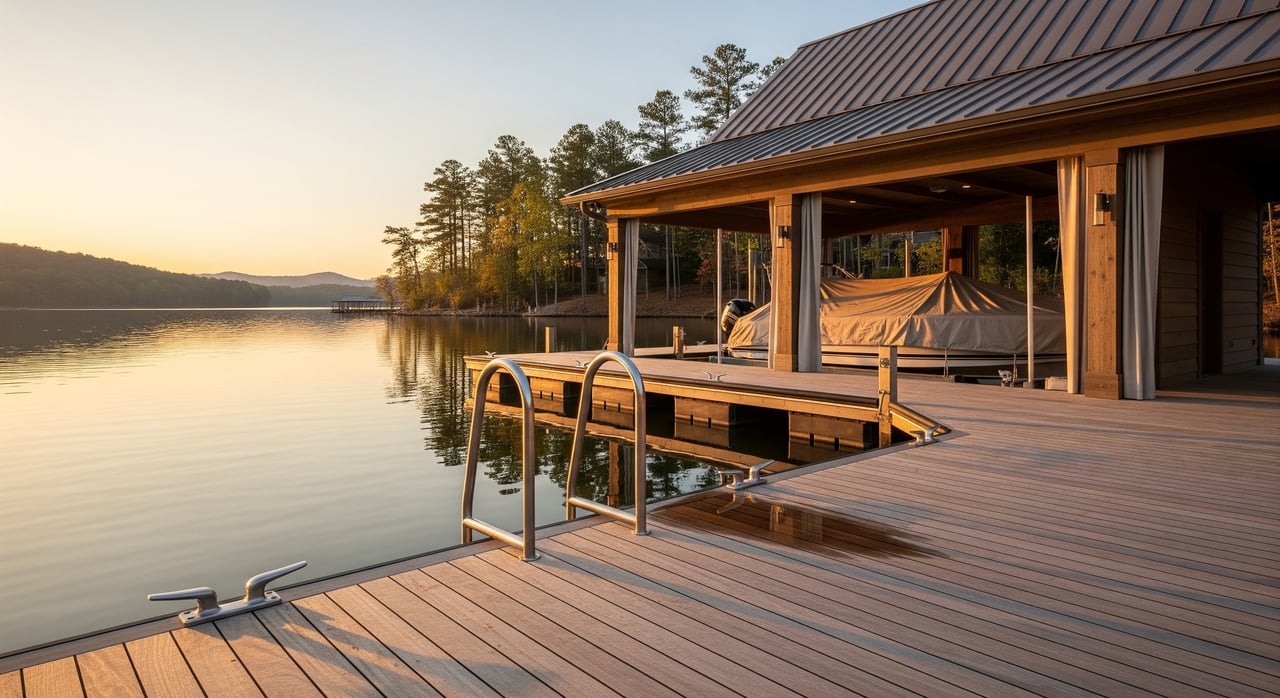
Thinking about buying on Lake Martin and wondering what it takes to have a boat dock? You are not alone. Waterfront buyers often find that permits, transfers, and timelines feel murky until someone lays them out clearly. In this guide, you will learn who approves docks, how the process works, what to ask before you write an offer, and how to avoid common pitfalls. Let’s dive in.
Who approves docks on Lake Martin
Lake Martin is a reservoir, so more than one authority can be involved. The primary decision-maker for docks and shoreline uses is Alabama Power through its Shoreline Management Program. You will likely need Alabama Power approval for a new dock, changes to an existing dock, or many shoreline modifications.
Federal and state reviews can also apply. The U.S. Army Corps of Engineers (USACE) Mobile District may require a permit for work in navigable waters or wetlands, and the Alabama Department of Environmental Management (ADEM) handles water quality certifications tied to federal permits. On the local side, county or municipal building departments in Elmore, Tallapoosa, or Coosa counties may require building permits for stairs, retaining walls, or shoreline stabilization.
Neighborhood rules can add another layer. Some subdivisions and HOAs have design standards, placement rules, or shared dock requirements. Always verify community covenants early.
Why the layers matter
Because Alabama Power controls shoreline uses on the reservoir, it can limit size, placement, and materials to protect navigation and operations. County and federal reviews may add their own conditions. You might need more than one approval, and a condition from one authority can affect the others.
How the permit process works
1) Start with a preliminary check
- Contact Alabama Power’s Shoreline Management office to confirm what is allowed at your specific location.
- If a dock already exists, ask the seller for the current permit or lease and any as-built drawings.
- Call the county permitting office to see if a local building permit is required for any land-based work.
2) Prepare your design and documents
Common items include:
- A site plan or survey with property lines, mean pool elevation, the proposed dock location, and nearby structures.
- Proof of ownership or rights to use the shoreline.
- Scaled dock drawings showing footprint, slips, materials, gangway dimensions, and anchoring.
- Photos of the shoreline and adjacent areas.
- Proof you comply with HOA covenants if they apply.
3) Technical and environmental review
- Alabama Power reviews spacing from neighboring docks, navigation safety, shoreline stability, visual impact, and consistency with reservoir operations.
- If wetlands or jurisdictional waters could be affected, USACE and ADEM may review. Some small residential docks can qualify under a federal Nationwide Permit, but you must confirm applicability.
- The county may review any land-side construction, floodplain issues, or erosion-control plans.
4) Approval and conditions
- Alabama Power may issue a permit or license with specific conditions on size, placement, materials, and maintenance responsibilities. Some authorizations are long-term, and some are short-term or conditional.
- Counties issue their own permits and may require inspections during construction.
5) Construction and inspections
- Build exactly to the approved plans and follow any methods specified in your permits.
- Final inspections or as-built documentation may be required by Alabama Power or the county.
6) Transfer and compliance going forward
- Confirm whether the permit or lease can transfer to a new owner and what paperwork and fees are involved.
- Plan for ongoing maintenance, insurance, and compliance with any updated shoreline rules.
Timing and common delays
Timelines vary. Gathering surveys and drawings can take days to weeks. Alabama Power’s review can take several weeks or longer, especially if a field visit or revisions are needed. County permits often process in a few weeks, but busy seasons can add time. If federal or state approvals are triggered, expect additional weeks or months unless a Nationwide Permit applies.
Expect delays when documents are missing, neighboring dock conflicts arise, or environmental reviews are required. HOA reviews and agency backlogs also add time. Build a conservative schedule, especially in spring and summer when demand increases.
Smart contingencies for your offer
Protect your purchase with clear contract language. Consider:
- A dock-permit contingency that gives you time to confirm whether the existing permit is valid, transferable, and in good standing, or to secure approvals for a new or modified dock.
- A document delivery requirement for the seller to provide the current dock permit or lease, as-built drawings, and any county inspection records.
- An inspection contingency that allows a marine contractor or dock specialist to evaluate condition and estimate repair or upgrade costs.
- A specific contingency if you plan a new dock that allows you to cancel or renegotiate if Alabama Power, the county, or federal/state permits are denied or require unacceptable changes.
Questions to ask before you write an offer
Use this checklist with the seller and listing agent, and verify with agencies when possible:
- Is there an existing dock, and is it properly permitted? Ask for the current permit or lease and as-built drawings.
- Is the permit active and transferable? What steps and fees are required to transfer it after closing?
- Has the dock been modified or rebuilt, and are there records and permits for those changes?
- Are there any notices, violations, or enforcement actions regarding the dock or shoreline?
- What type of dock is it (floating or fixed), what materials were used, and how old is it?
- How many slips and what are the dimensions?
- Are there navigation channels, buoys, or safety restrictions nearby?
- Is the shoreline stable, or is there active erosion? Any recent stabilization work?
- Are there HOA rules that limit design, require shared docks, or set placement standards?
- Are there annual fees, lease payments, or shared maintenance responsibilities?
- Do the deed and survey show clear riparian access or only an easement?
- Are there recorded setbacks or easements that affect dock placement?
Common pitfalls and how to avoid them
- Unpermitted or “grandfathered” docks: Never assume compliance. If a dock lacks proper authorization, you may face required upgrades, fines, or removal.
- Permit expiration and transfer: Some authorizations have end dates or do not transfer automatically. Confirm the rules and costs before you rely on an existing dock.
- Shoreline stabilization: Riprap, retaining walls, or other stabilization often require separate approvals. These projects can be expensive and take more time.
- HOA rules and shared docks: Some communities limit private docks or require shared facilities that can have waiting lists. Verify before you plan extra slips or lifts.
- Insurance and liability: Plan for liability coverage and maintenance. Ask about past insurance claims or damage.
- Seasonal and environmental constraints: Water levels, nesting seasons, and weather can push construction into narrower windows.
- Long-term costs: Budget for repairs, electrical work for lifts or lighting, and material upgrades over time.
Planning a new dock
If your goal is a new dock, start early. Discuss your concept with Alabama Power to gauge feasibility before you close. Bring in a local marine contractor and a licensed surveyor to shape a design that meets spacing, anchoring, and materials requirements.
Ask for preliminary cost estimates and lead times. Then set offer contingencies that allow you to walk away or renegotiate if approvals are denied or require changes that do not fit your plans or budget.
Next steps
Your best path is straightforward: verify the current permit status, confirm what is allowed at your specific shoreline, and build a conservative timeline with room for agency reviews. If you want a second set of eyes on documents or need introductions to surveyors or marine contractors, our team is here to help you navigate the real estate side with clear steps and steady communication.
When you are ready to explore Lake Martin waterfront options or to sanity-check a contract strategy, reach out to Margo Ladner for client-first guidance and practical coordination.
FAQs
What is the first step to get a Lake Martin boat dock permit?
- Start by contacting Alabama Power’s Shoreline Management office to confirm what is allowed at your specific location and what documents you will need.
Do I need approval if a dock already exists on a property?
- Yes. Ask the seller for the current Alabama Power permit or lease and any county records, then verify transfer steps and whether the authorization is in good standing.
How long does it take to get a Lake Martin dock permit?
- Timelines vary from weeks to months depending on complexity, season, and whether federal or state reviews are needed; build a conservative schedule into your plans.
Can an existing dock permit be transferred to me as the buyer?
- Many authorizations can transfer, but you must confirm the specific rules, paperwork, and any fees before closing to avoid gaps in compliance.
Who approves shoreline stabilization like riprap or retaining walls?
- Alabama Power will review shoreline work, and you may also need county permits; if wetlands or waters of the U.S. are affected, USACE and ADEM could be involved.
Do small residential docks need federal permits at Lake Martin?
- Some small projects may qualify under a federal Nationwide Permit, but you must confirm applicability with the USACE Mobile District before proceeding.
What contract contingencies protect me when buying waterfront?
- Include a dock-permit contingency, require the seller’s permit documents, add a dock specialist inspection, and ensure you can cancel if required approvals are denied.